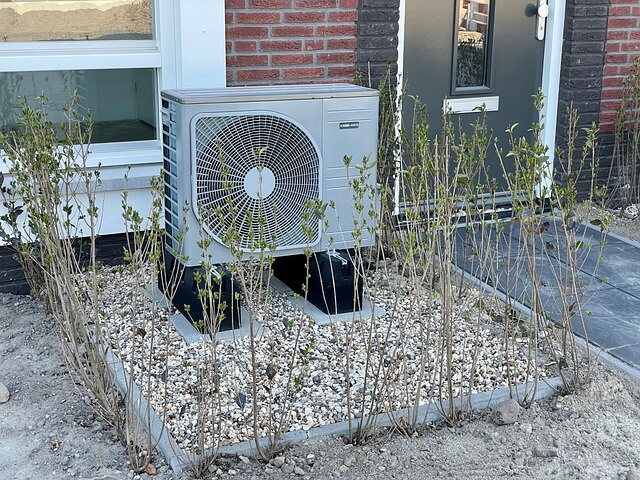


After two correction years, the European heat pump market has turned a corner — and the recovery is showing up in export data, not just forecasts. For importers, distributors, and retail chains planning their 2026 sourcing, the window between now and the next heating season is when supplier decisions get made. This guide walks through what the latest data actually says, which product specifications European buyers are ordering, and what to check before signing with a manufacturer.
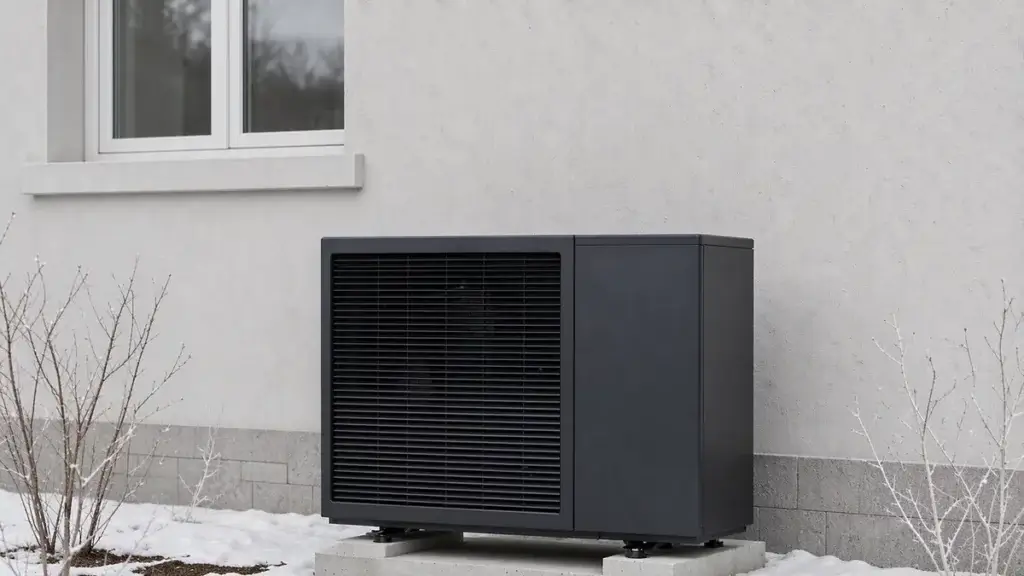
Europe’s Heat Pump Market Is Surging Again
The Numbers Behind the 2026 Recovery
The most recent market data points to a broad, policy-supported rebound rather than a one-off bounce:
- European sales are growing again. According to the European Heat Pump Association (EHPA), presented at the EU Commission’s Heat Pump Accelerator Platform, heat pump sales across Europe in Q1 2026 increased by 17% compared with Q1 2025. Around 28 million heat pumps are already installed across Europe — against roughly 100 million homes still heated by fossil-fuel boilers. That gap is the replacement opportunity.
- China’s export data confirms the pull. China General Administration of Customs figures reported by industry press show heat pump products and components exports reached RMB 113.04 billion in the first half of 2026, up 30.3% year-on-year. Exports to 21 European countries grew 51.0% in the same period, with April shipments to the EU-27 up 77.9% — the Netherlands (+137%), Germany (+129%) and Spain (+105.5%) leading the way.
- The market size keeps compounding. Global Market Insights values the European heat pump market at USD 19.16 billion in 2026, up from USD 16.07 billion in 2025, and projects a 20.2% CAGR through 2035.
For buyers, the practical meaning is simple: lead times are tightening for compliant, inverter-based models, and factory production slots for the heating season are booked earlier each year.
What Is Driving Demand Right Now
Three forces are converging in 2026, and each one shapes what you should be sourcing.
1. Policy has shifted from incentive to obligation
The EU’s 2026 Electrification Action Plan sets a target of 4 million heat pump installations per year by 2030 — up from roughly 2.4 million in 2025 — backed by a European Investment Bank commitment of EUR 75 billion over three years for grids and storage. Meanwhile, the recast Energy Performance of Buildings Directive (EPBD) requires member states to cut average residential primary energy use by 16% by 2030, and EU-level financial incentives for new stand-alone fossil fuel boilers ended in January 2025. Europe still has an estimated 140–150 million gas boilers that will eventually need replacing. Demand at the replacement decision point is increasingly steered toward heat pumps by regulation, not just by subsidies.
2. Energy economics now favor electrification
With gas prices still volatile, EU analysis indicates that households switching from a gas boiler to a heat pump can cut heating costs by 20–60%. For distributors, that running-cost story is the single strongest retail selling point — and a reason end-customer demand stays resilient even when subsidies fluctuate.
3. Record heat turned heat pumps into year-round products
Europe’s record-breaking summer in 2026 changed the product mix fundamentally. In Southern European markets, dual-purpose heating + cooling models now account for an estimated 65–70% of orders. A heat pump is no longer positioned as a winter appliance; it is sold as a full climate solution. Buyers who source cooling-capable inverter models are capturing demand in both seasons.

air to water heat pump heating cooling hot water
What European Buyers Are Actually Ordering
The product profile that moves in 2026 is clearly defined by the market data:
| Segment | What’s in demand |
|---|---|
| Residential | 5–16 kW inverter split air-to-water units, monobloc designs |
| Light commercial | 20–100 kW modular units for multi-family and commercial retrofits |
| Refrigerant | R32 and R290 (propane) low-GWP monobloc models |
| Function | Heating + cooling reversible units, especially for Southern Europe |
| Controls | Smart/IoT-enabled controls improving seasonal performance by 8–12% |
The shift to low-GWP refrigerants is regulatory, not optional: the EU F-Gas Regulation mandates a 55% reduction in HFC consumption by 2030, which is accelerating the migration to R290 and R32 across the supplier base. When comparing suppliers, refrigerant roadmap transparency is now a due-diligence item, not a detail.
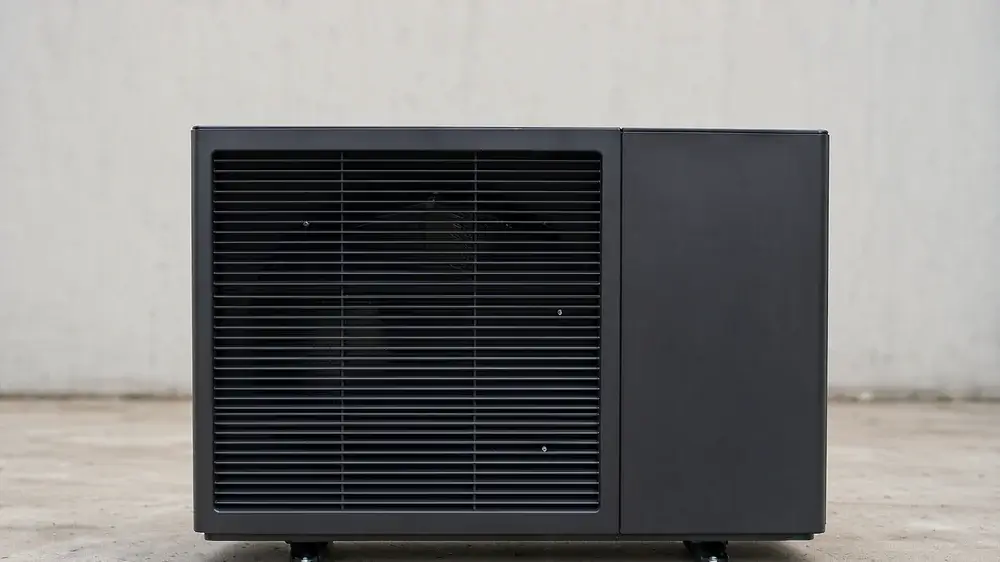
R290 monobloc units — the low-GWP format European buyers are specifying for 2026 orders.
The Compliance Checklist Before You Buy
Products without the right certifications simply will not clear EU market access. Before committing to a factory order, verify:
- CE marking under the relevant EU directives
- ErP / Ecodesign seasonal efficiency documentation (the datasets that determine energy label performance)
- F-Gas Regulation compliance for refrigerant type and quota documentation
- Keymark / MCS certification if you are supplying the UK market
- Test reports you can verify — not just marketing claims; ask for the actual laboratory reports per model
Choosing a Manufacturer: Five Questions That Matter
Beyond certifications, 2026 sourcing decisions increasingly come down to supply-chain resilience:
- Can the factory deliver inverter compressor supply reliably? Compressor availability has become a genuine bottleneck during peak booking seasons.
- Does the manufacturer offer production outside mainland China? With tariffs and “China Plus One” procurement policies reshaping sourcing maps, manufacturers with bases in both China and Southeast Asia — for example, dual production bases in China and Thailand — give importers a practical hedge on tariff exposure and delivery risk.
- Is OEM/CKD service real or nominal? Ask for documented OEM cases: mold development capability, customization depth (controls, refrigerant, capacity), and repeat clients by country.
- What is the production capacity in units per line? A 50+ production line footprint is a reasonable scale benchmark for covering peak heating-season orders without Q4 delivery slippage.
- Do they hold certifications in-house or borrow them? In-house test labs and an in-house R&D engineering team are the difference between a supplier and a manufacturer.
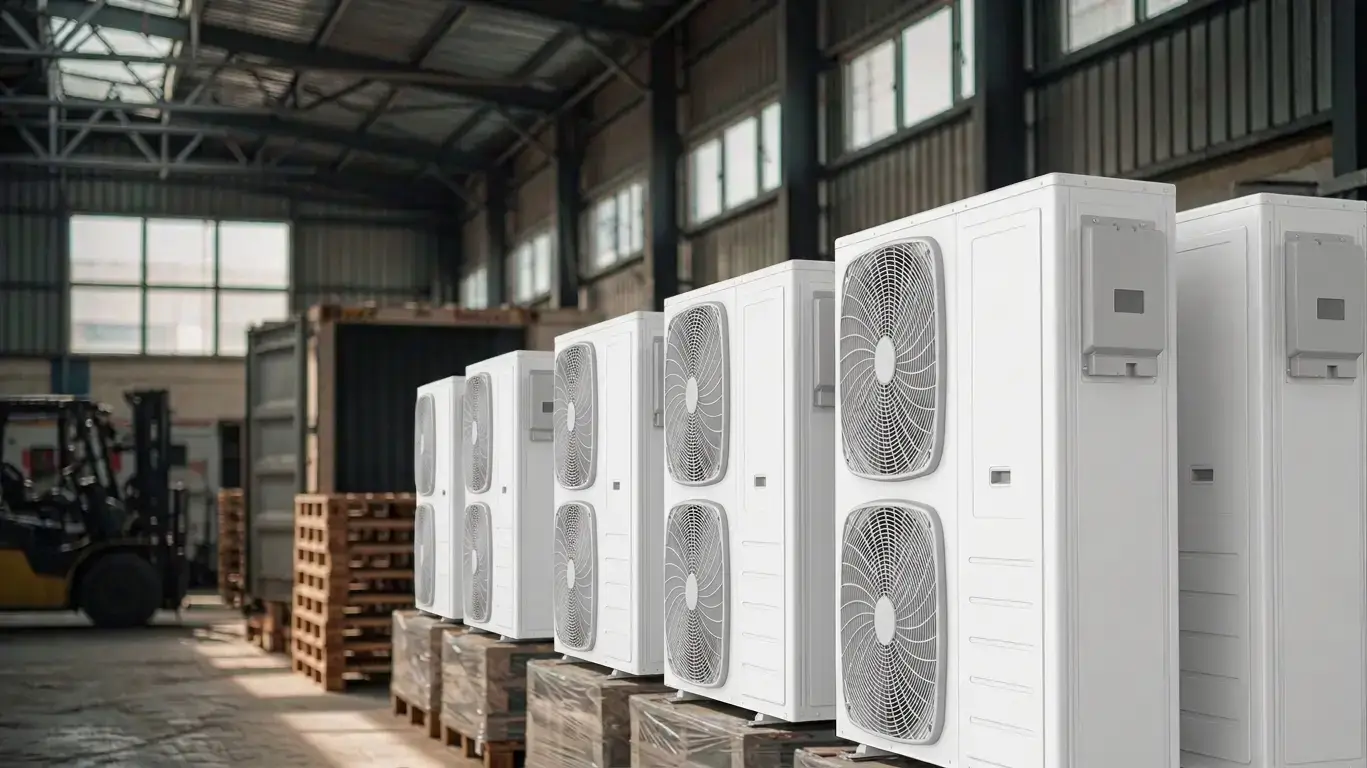
Pre-season production slots and warehouse stock decide who can deliver before the heating season.
The 2026–2027 Outlook
Every credible forecast — from the EU’s own deployment targets to third-party market research — points the same direction: European heat pump demand is in a structural, policy-backed growth cycle, with the biggest near-term volumes in Germany, the Netherlands, Poland, Spain and Italy. The winners among importers will be those who lock in compliant, inverter-based supply before the pre-season booking rush, and who choose manufacturing partners with verified certifications, dual-base production flexibility, and genuine OEM depth.
If you are evaluating heat pump suppliers for the coming season, our heat pump product line covers 5–100 kW inverter units with R32/R290 options, manufactured at our China and Thailand bases with full CE/ErP documentation — contact our export team for the current lead-time schedule and OEM terms.
Frequently Asked Questions
Is the European heat pump market growing in 2026?
Yes. As adoption accelerates, EHPA data shows Q1 2026 sales up 17% year-on-year, and China’s customs data shows heat pump exports to 21 European countries up 51% in H1 2026, confirming renewed distribution-channel restocking.
Which heat pump models are European buyers sourcing?
Predominantly 5–16 kW inverter split residential units and 20–100 kW light-commercial units, with R32/R290 low-GWP refrigerants and reversible heating + cooling function — the latter now 65–70% of orders in Southern Europe.
What certifications do heat pumps need for the EU?
CE marking, ErP/Ecodesign seasonal efficiency documentation, F-Gas compliant refrigerant handling, and Keymark or MCS certification for the UK market.